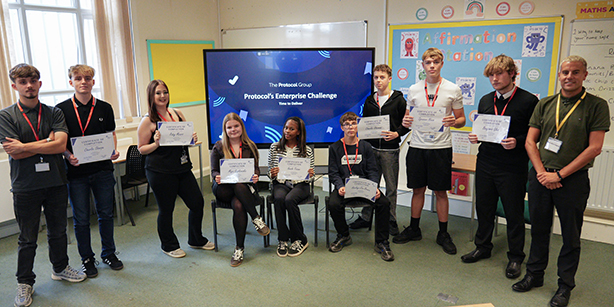
Working in teams of three, T Level Business students at North Notts College put their entrepreneurial skills to the ultimate test during an Elevator Workshop led by The Protocol Group. Over two sessions, they built bold business concepts from scratch before pitching their ideas for the chance to secure a £100 investment.
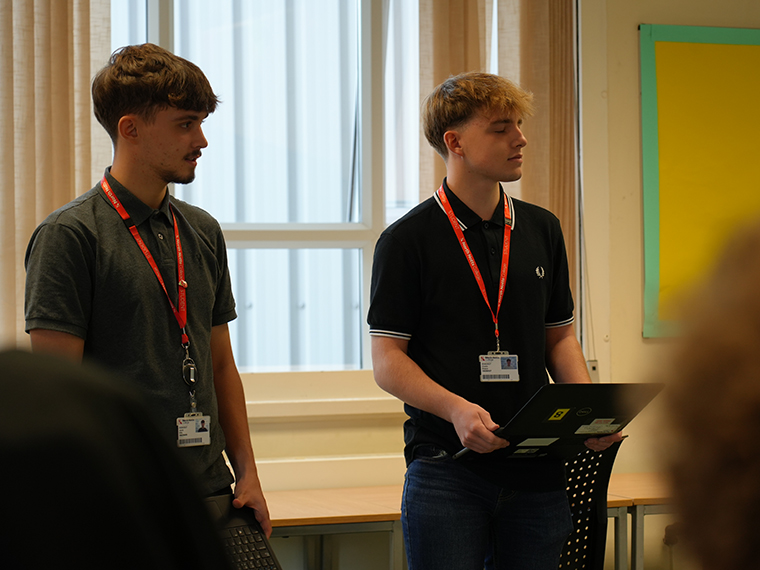
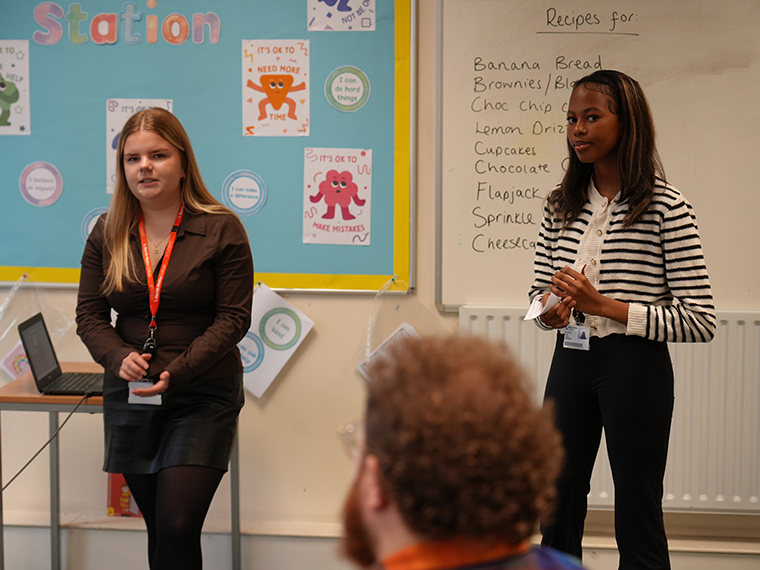
Beginning with the “Convince Me Task”, students stepped into the shoes of entrepreneurs. Each group developed viable business concepts from everyday items and impractical product ideas. Teams mapped out their core business models, defined target audiences, and identified key selling points to make their products market-ready.
As their concepts took shape, teams faced high-pressure “Investor Challenges”. Sudden twists included cost increases, new competitors, celebrity endorsements, and negative reviews. Forced to think on their feet, students quickly adapted their strategies and refined their ideas under tight deadlines.
Having refined their concepts, students moved into the “Perfect Pitch” session to practice presenting with confidence. The task challenged them to introduce themselves in 60 seconds without revealing their name, course, or hometown, using their achievements and challenges to tell their story. Speed networking rounds raised the pressure, with students refining their pitches to fit 30-second and 15-second time limits.
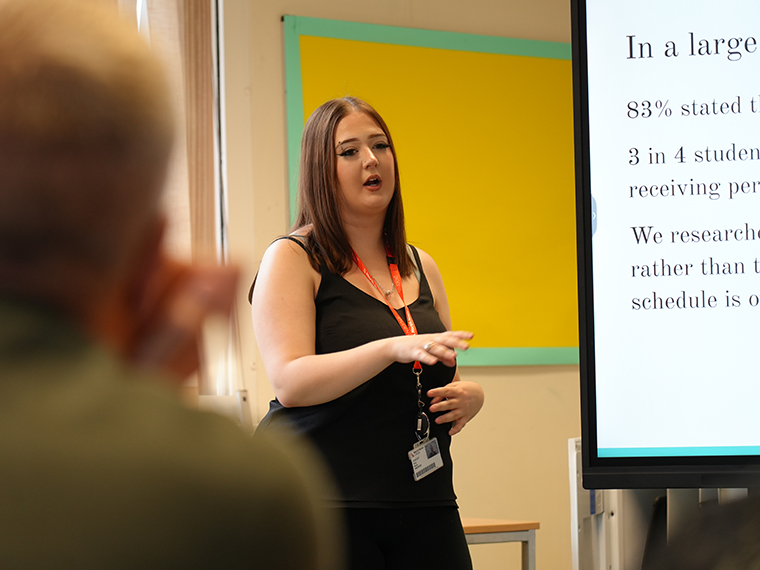
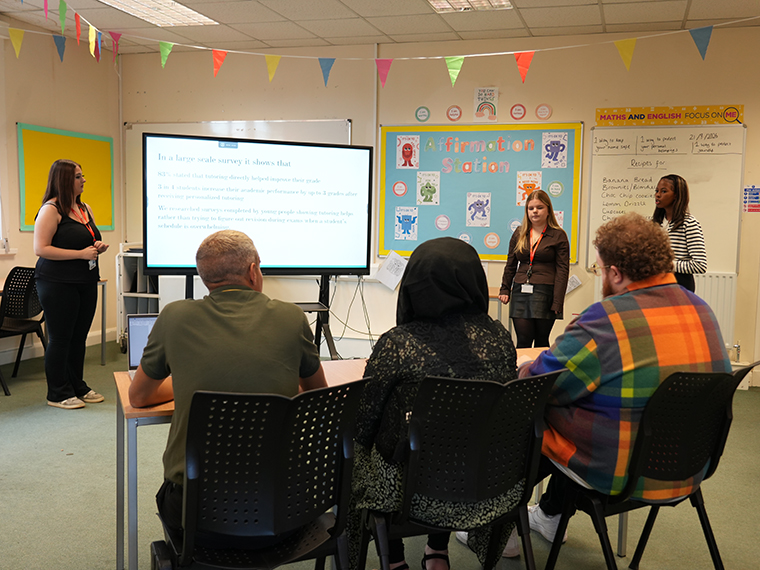
With their business plans tested and delivery skills sharpened, each team took the stage for the final showcase. Teams delivered a three-minute business pitch detailing their model, target audience, and competitive edge, followed by a live investor Q&A session.
Judges praised each group on presentation quality, commercial feasibility, and overall teamwork before awarding the £100 prize. The workshop concluded with a debrief on the transferable skills developed throughout the day, including persuasion, problem-solving, and calm under pressure.
Jack, Foundation T Level Business student, said:
“The presentation was overall great. Dean included us multiple times and ensured that it wasn’t boring or dull. I learned multiple things including talking in front of people and gaining more confidence. When under pressure, I learned to keep my cool as well. I felt included at all times, which made it easier to learn and retain information.”
Rawan, Foundation T Level student, said:
“I enjoyed this lesson as it felt like I was in a real-life scenario. Every speech interaction or presentation helped me learn new skills. My confidence feels better, especially with body language, and I think this would be good for people who want to develop their skills. I would recommend it 10/10.”
Favour, Foundation T Level student, said:
“I thought the session was great and beneficial. I learned about communication, first impressions, body language and how to start conversations. I think the lesson was beneficial overall.”
Discover how Business courses can help you develop practical skills for your future career.
Find out more about T Levels and Business courses at North Notts College.
Choosing what to do after GCSEs can feel like a big decision. With so many options available, from A-levels and Apprenticeships to college courses, it can be difficult to know which route is right for you. If you enjoy learning practical skills and want to gain experience in a real workplace, T Levels could be worth considering.
At RNN Group, T Levels offer students the opportunity to combine classroom learning with valuable industry experience, helping them prepare for their future careers.
This week is T Level Week so it is a great time to explore what these qualifications involve and how they could open doors to new opportunities.
T Levels are two-year technical qualifications designed in partnership with employers to give young people the knowledge and skills needed in different industries. The ‘T’ stands for technical, and they offer an alternative to A-levels for students who want a more career-focused approach to learning.
One T Level is broadly equivalent in size to three A-levels, meaning students can develop specialist knowledge while working towards their future ambitions.
Unlike qualifications that focus mainly on classroom-based study, T Levels combine lessons with practical projects, assessments and an industry placement. This allows students to understand how their learning applies to real-life situations and what working in their chosen industry might look like.
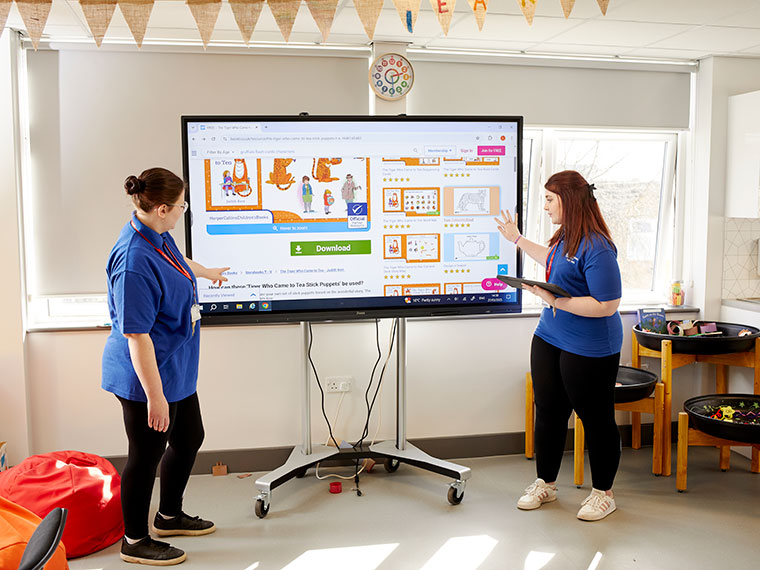
One of the biggest benefits of a T Level is the opportunity to gain experience in the workplace.
Students complete an industry placement lasting at least 45 days, where they can develop practical skills and experience what it is like to work in a professional environment. This is a chance to learn from experienced staff, build confidence and gain a better understanding of the expectations of employers.
For many students, this experience can be just as valuable as the qualification itself. It can help them discover what they enjoy, identify areas they want to improve and feel more prepared for life after college.
Combining theory with hands-on experience also makes it easier to see how the skills developed in the classroom can be used in a future career.
At RNN Group, T Levels are available across a range of subject areas, giving students the opportunity to explore different interests and career paths.
With such a variety of subjects available, there are opportunities for students with different interests and ambitions. Choosing a subject you enjoy can be a great first step towards finding a career that suits you.
Course availability varies between RNN Group Colleges, so it is worth checking the individual course information before applying.
Completing a T Level does not mean you have to follow just one career path. In fact, these qualifications are designed to give students options for what comes next.
Some learners may choose to move directly into a skilled occupation, using the knowledge and workplace experience they have gained. Others may progress to a higher or degree apprenticeship, allowing them to continue learning while earning a salary.
There is also the opportunity to continue into further study, including higher technical qualifications or higher education.
Having different progression routes available means students can make decisions based on their interests, experiences and long-term goals. It also means that choosing a technical qualification does not close the door on further education.
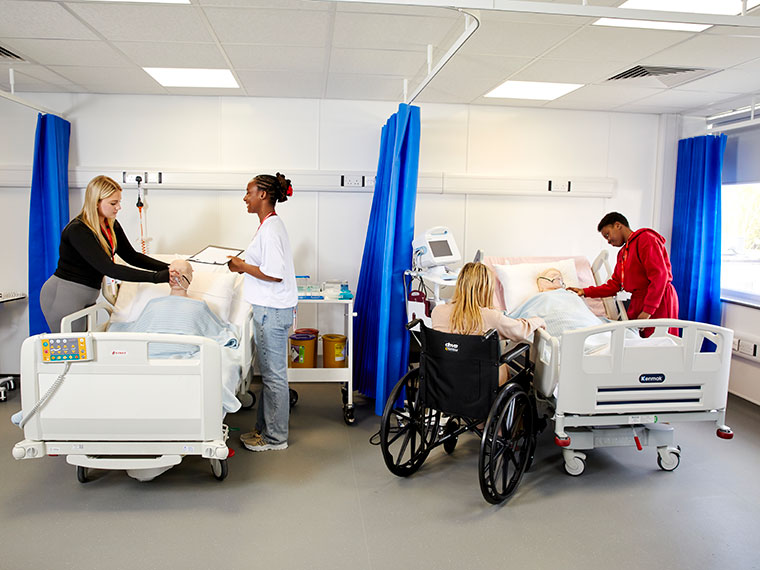
If you enjoy practical learning, want to develop skills for a particular industry and like the idea of gaining real workplace experience, a T Level could be a good fit.
It is worth thinking about the subjects you enjoy, the careers that interest you and how you prefer to learn. Researching course content and entry requirements can also help you decide whether a T Level matches your plans.
Speaking to college staff, attending open events and asking questions about industry placements can give you a clearer picture of what to expect.
T Level Week is an opportunity to find out more about these qualifications and consider whether they could be the right choice for your future.
Whether you are interested in health, construction, digital, business or another specialist area, T Levels can help you build knowledge, gain practical experience and take steps towards your career ambitions.
To explore the courses available, visit our T Levels webpage and find out more about the opportunities at Rotherham College, North Notts College and Dearne Valley College.
Your future does not have to follow the same path as everyone else’s. With the right course, practical experience and support, you can start building a future that works for you.
Find out what T Levels are available at RNN Group of Colleges.
This week marks National T Levels Week (19th – 23rd October 2026), and at North Notts College, we couldn’t be more excited to shine a spotlight on technical education!
Now in their 7th year of delivery, T Levels continue to transform post-16 education by bridging the gap between classroom learning and real-world industry experience. With nationwide pass rates hitting 92.6% this year and over two-thirds of students achieving a Merit or above, as shown by statistics published by the Department for Education, there has never been a better time to showcase what makes these qualifications so special.
Whether you’re a student weighing up your post-GCSE options, a parent looking for guidance, or a local employer eager to shape tomorrow’s workforce, here is everything you need to know about T Levels and how we’re celebrating this week.
T Levels are dynamic, two-year qualifications taken after GCSEs. Designed in direct collaboration with leading employers, they equip students with the exact skills, knowledge and practical experience top businesses are searching for.
Whether your next step is moving directly into an entry-level skilled career, securing a Higher or Degree Apprenticeship, or progressing to university – including Russell Group institutions – a T Level opens the door.
At North Notts College, T Levels Week is about the celebration of our students’ hard work, our dedicated teaching staff and the incredible regional employers who host our industry placements.
Research shows that around a quarter of T Level students secure employment directly with their placement employer after graduating. According to the Department for Education’s T Level evaluation research, 71% of students agree their course prepared them directly for the workplace – significantly higher than traditional Level 3 routes.
Want to see what studying a T Level is actually like?
Take a look at a ‘Day in the Life’ of a North Notts College T Level student and experience a firsthand look at how our learners balance campus study with real-world industry placements.
A day in the life of a North Notts College T Level student
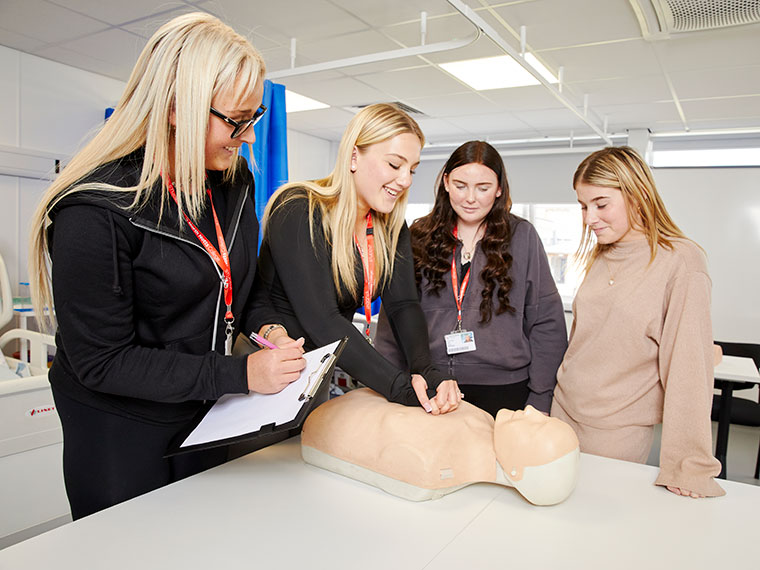
Ready to take the next step or partner with us?
Happy T Levels Week 2026 from all of us at North Notts College!
Year 11 is an important milestone for young people and their families. With GCSEs on the horizon, many parents and carers are beginning to think about what comes next, from choosing the right college and course to understanding the opportunities available after school.
For families across South Yorkshire and North Nottinghamshire, Year 11 Parents’ Information Evenings at Rotherham College, North Notts College and Dearne Valley College offer a valuable opportunity to explore those options, ask questions and help young people make informed decisions about their future in advance of the admission process starting in November.
Whether your child has a clear idea of what they want to do or is still exploring their interests, these events are a great place to start.
Choosing what to do after Year 11 is a big decision, and it is one that young people do not have to make alone.
Parents and carers play an important role in helping their children understand their options, build confidence and find a pathway that suits their interests, strengths and ambitions.
At these information evenings, families can find out more about the opportunities available at college and gain practical information to help support conversations at home in advance of Year 11 learners making an application to one of RNN Group’s Colleges.
From understanding different qualifications and course options to finding out what college life is really like, attending an information evening can help turn uncertainty into a clearer picture of the future.
Book on to North Notts College’s Parents’ Information Evening:
Tuesday 6th October 2026, 5pm–7.30pm
Book on to Rotherham College’s Parents’ Informatoin Evening:
Wednesday 7th October 2026, 5pm–7.30pm
Book on to Dearne Valley College’s Parents’ Information Evening:
Thursday 8th October 2026, 5pm–7.30pm
Presentations are scheduled to run at 5.15pm, 5.45pm, 6.15pm and 6.45pm. These are repeat sessions, so parents and carers only need to attend each presentation that interests them once. Registration is available, and families can also turn up on the evening.
There is no single route that suits every young person. These evenings are an opportunity to explore different possibilities and consider what might work best for your child.
Encourage your young person to be involved in these conversations. Their interests, goals and aspirations should be at the heart of the decision.
To get the most from a Parents’ Information Evening, it can help to prepare a few questions in advance.
Even if your child is not yet sure what they want to do, asking questions and gathering information is a positive first step.
Our Parents’ Information Evenings at Rotherham College, North Notts College and Dearne Valley College are designed to help families feel informed, prepared and confident about the choices ahead.
If you are a parent or carer of a Year 11 student, take the opportunity to find out more, explore the options and start planning the next chapter together.
After next week’s Year 11 Parents Information Evenings, your young person may have RNN Group’s Schools Careers Teams in school assemblies talking about the next steps as well as seeing the team at mock interviews and careers support during the year. You can help your young person by attending these events to find out more in advance of the Open Events in November which we hope parents / carers and Year 11 learners will attend after having these weeks of information support:
Rotherham College – Saturday 14th November, 10-1pm
Bricklaying Apprentice Corey Richardson will represent RNN Group on the national stage after being named a finalist for the Association of Colleges (AoC) Student of the Year Awards.
Selected alongside 13 other finalists, he will compete for the Apprentice of the Year Award at the ceremony in November.
In May 2024, Corey won the Guild of Bricklayers Junior Title at Grimsby Institute. He became the first North Notts College learner to win the competition since its inception nearly five decades earlier. One year later, he secured the Guild of Bricklayers Senior Title, marking the first senior win for the College since 1987.
Away from the competitions, Corey continues to develop his skills through an apprenticeship with his father’s bricklaying business. At college, he has consistently supported fellow apprentices, contributing to a positive learning environment.
Reflecting on his experience, Corey said:
“My confidence and communication skills have improved throughout my apprenticeship, while I’ve also developed the practical skills I need as a bricklayer.”
Corey will now join finalists from across England at the AoC Annual Conference dinner on Tuesday 10 November 2026, when the Apprentice of the Year winner will be announced.
Cheryl, Director of Quality & Academic Standards at RNN Group, said:
“We are delighted that Corey has been shortlisted as a finalist and look forward to the winner being announced.”
Discover where a skilled trade can take you.
Find out more about Construction courses at North Notts College
It hits out of nowhere. You’re sitting in a classroom, staring at a slide or a computer screen, and a cold wave of dread washes over you; I’ve made a massive mistake. This course isn’t for me.
First, take a deep breath.
Experiencing the ‘wrong subject’ panic in your first few weeks of college is almost a rite of passage. Transitioning from GCSEs to BTECS, T Levels, and vocational courses is a huge shift, and choosing your options at age 15 or 16 doesn’t always match the reality of sitting in the classroom.
Feeling like you’re on the wrong path doesn’t mean your academic life is over, nor does it mean you’re stuck. Here is how to navigate the panic, figure out your next move, and swap courses.
Before you rush to change things up, figure out what’s actually causing the panic. Is it the subject itself, or the environment?
T Levels and BTECs can hit very differently than GCSEs! Feeling stressed about heavier workloads or weird timetables is totally normal. Give yourself time to adapt before deciding you’re on the wrong path.
If you picked Animal Care expecting endless puppy cuddles, but got hit with biology, enclosure scrubbing, and strict welfare checks… yeah, that’s a classic subject mismatch! If the content really isn’t for you, let’s talk options.
Missing your old school squad? Lost on a massive campus? Have no idea what to do with three empty hours between classes? Talk to our Wellbeing Mentors and Personal Development Teams! You can join campus clubs to fill up those free periods and meet new friends who share the same interests.

The most important thing to know is that we’d rather you be happy with your course, then sit and stick something out that you don’t like. You aren’t locked in, and you don’t have to suffer through a subject you dread just because you picked it months if not a year back.
That’s why we run a dedicated ‘Swap Don’t Drop’ system!
Within your first 6 weeks, if you realise a subject isn’t working for you, you can work with us to look at alternative options and swap you onto a different course. The door is open to find a path you actually enjoy.
You don’t have to figure this out alone, and you certainly don’t need to feel embarrassed. Staff handle course swaps every single term, we want to make sure we find a course for you.
Not sure what to swap to? Pop over to the Careers team! They’ll take a look at your GCSE results, chat through your long-term goals, and help you find a course that actually clicks.
Found a new subject that looks promising? Have a quick catch-up with the department tutors first. They’ll break down the modules and let you know if there’s any quick reading to get you up to speed!
To make sure your ‘Swap Don’t Drop’ transition as seamless as possible, keep these three factors in mind:
Applications are only open until November, so be sure to act before then.
Check that your existing grades meet the criteria for the new course you want to move into.
If a course that you are interested in is delivered at one of our other campuses, we have a student bus service to help with your travel!
Spotting early on that something isn’t working-and taking advantage of the Swap, Don’t Drop window isn’t a failure. It’s a step in taking charge of your own education!
Next week is Careers and Skills Week at RNN Group, and it’s a great opportunity to think about where your course, your skills and your experiences could take you in the future.
There will be plenty happening across our campuses, including careers events, employer activities, workshops and opportunities to speak to people from different industries.
But Careers and Skills Week isn’t just about finding out what job you might want to do.
It’s also about understanding what employers are looking for and recognising the skills you are already developing.
When you’re studying, it can be easy to think that your qualification is the main thing an employer will be interested in.
Of course, your knowledge and qualifications matter. But employers also want people who can communicate, solve problems, work with others, manage their time and adapt when things don’t go according to plan.
These are often called Power Skills or transferable skills.
They’re skills that you can take with you from one job to another, from one industry to another and from education into the workplace. RNN Group’s Skills for Employment programme has been developed around ten of these skills.
At RNN Group, the ten Power Skills are:
You might look at that list and think, “I already have some of those.” And you probably do.
You might have demonstrated communication by working with customers, giving a presentation or speaking to someone new. You could have shown problem-solving by finding a solution when something went wrong on your course or at work. Perhaps you’ve demonstrated resilience by making a mistake, learning from it and carrying on. These experiences all count.
The important thing is being able to recognise the skill, understand how you developed it and explain it to someone else.
This is where RNN Group’s Skills for Employment programme comes in.
The programme has been created with employers in mind, recognising that the skills needed in the workplace go beyond what can be measured in an exam or qualification.
Learners work towards developing the ten Power Skills and collect evidence to demonstrate how they have used them. For each skill, learners can showcase three examples, which are recorded through the Group’s system. They can then download a digital certificate showing the skills they have achieved.
That means you aren’t simply saying: “I’m good at communication.” You can actually show how you’ve demonstrated it.
For example, you might have helped at an open event and spoken to prospective students, communicated professionally through emails or telephone calls, or developed your confidence when speaking to employers.
Similarly, creativity might involve finding a different way to approach a task, while resilience could be demonstrated by dealing with a mistake, learning from it and getting on with the job.
These real examples can make a big difference when you’re talking about yourself to an employer.
Think about what happens in a real workplace. A customer might have a problem. A deadline might change. A colleague might need some help. Something might go wrong with a project. You might be asked to do something you’ve never done before.
Technical knowledge is important, but being able to think, communicate, adapt and respond is important too.
That’s why Power Skills can be useful across so many different careers. The same ability to communicate effectively could be useful whether you’re working in healthcare, engineering, construction, business, hospitality, education or one of the many other industries represented across RNN Group.
And these aren’t skills you have to wait until you’re employed to develop. You can build them now.
Throughout Careers and Skills Week, you’ll have opportunities to find out more about careers, meet employers and take part in activities focused on employment and the skills employers are looking for.
Make the most of those opportunities: Ask questions or talk to employers about what they look for when recruiting; find out what different jobs are really like and take part in workshops. Think about the skills you already have and the ones you want to improve.
You could even ask an employer: “What skills make someone stand out when you’re recruiting?”
You might be surprised by the answer. Your skills can tell your story.
One of the most useful things you can do when preparing for employment is learn how to talk about your skills.
Instead of simply listing communication, teamwork and problem-solving on a CV, think about the experiences behind those words.
Those examples give an employer a much better idea of what you can actually bring to a workplace.
And that’s the thinking behind Skills for Employment – helping learners build transferable skills alongside their qualifications and have evidence to demonstrate them. You don’t need to have your whole career planned out: Perhaps you already know exactly what career you want, perhaps you’ve got three completely different ideas or perhaps you’re still trying to work out what you enjoy.
Whatever stage you’re at, Careers and Skills Week is an opportunity to take the next step.
Your career won’t be defined by one week, one qualification or one decision. It’s something you’ll continue to develop as you gain experience, meet people and learn more about yourself. So next week, get involved. Explore. Ask questions. Build your skills. Talk to employers. And don’t forget to recognise the skills you’re already developing along the way.
Your qualification can show what you’ve learned.
Your Power Skills can help show employers how you work.
And together, they can help you take the next step towards your future career.
Looking for Higher Education in Worksop? Discover how the University Centre Rotherham’s Worksop Campuses – North Notts College Campus and The Bridge Skills Hub – are helping local students and adult learners access university-level study without having to move away from home.
For many people, the idea of going to university can mean leaving their hometown, finding accommodation and travelling long distances to study. But Higher Education in Worksop offers another option.
Located in the heart of Worksop town centre, The Bridge Skills Hub provides a modern local setting for higher-level study, with North Notts delivering a range of Higher Education courses designed to support career progression, retraining and further study.
Whether you’re a recent college leaver, an adult learner looking for a career change, or someone who wants to gain a higher-level qualification while remaining close to home, North Notts and The Bridge could provide the route you’re looking for.
We understand that choosing where to study is a major decision. You need to consider the course, the learning environment, costs, travel and how well your studies fit around your life.
Studying locally can offer a number of advantages: At The Bridge Skills Hub, students can access higher-level qualifications in a dedicated education centre in Worksop. North Notts Higher Education provision is designed around local access, employability, specialist facilities, industry links and flexible study options.
For students who want to study local and go far, Worksop could be the ideal place to begin.
If you’re searching online for university courses in Worksop, you may be surprised by the range of higher-level study available locally.
North Notts delivers a variety of Higher Education courses at The Bridge Skills Hub, with current provision including areas such as:
Current provision includes the Foundation Degree (FdSc) in Assistant Practitioner Health and Social Care, HNC/HND in Computing and the Access to HE Diploma in Health Science Professions.
We know that staying local for many people is key to supporting them with their busy lives. North Notts gives learners the opportunity to progress into higher-level study while remaining in the local area.
The college offers degree-level courses designed with future employability in mind, alongside routes such as Access to Higher Education and other higher-level qualifications.
For some students, studying locally can also reduce the additional costs and disruption associated with moving away to university. North Notts highlights the benefit of accessing accredited degree courses locally without the same travel and accommodation expenses that can come with studying further afield.
Did you know that Higher Education isn’t only for students coming straight from sixth form or college?
The Bridge Skills Hub is particularly suited to learners who want to:
North Notts specifically partners with The Bridge Skills Hub as an option for people looking to switch careers, retrain or further their education.
So if you need 10 reasons to study Higher Education in Worksop, here they are:
One of the biggest benefits of studying in Worksop is convenience. The Bridge Skills Hub is located in Worksop town centre, making higher-level education more accessible to people living locally and across North Nottinghamshire.
University doesn’t automatically mean moving away. Studying locally can allow you to remain close to family, friends, work and your existing support network.
North Notts College offers higher-level qualifications and degree-level study through its HE provision, with courses delivered at The Bridge Skills Hub.
Higher Education can help you develop the specialist knowledge and transferable skills needed to progress in your chosen career. North Notts College’s HE courses are designed with employability and professional progression in mind.
The Bridge Skills Hub’s Education Centre includes six classrooms, breakout spaces, an auditorium, private offices, two clinical teaching rooms, a clinical suite and a mock ward. These facilities give students opportunities to learn in realistic professional environments.
The Bridge Skills Hub has strong links with local industry, helping connect education with the skills and workforce needs of the region.
If you don’t have the qualifications traditionally associated with university entry, an Access to Higher Education course could be an alternative route.
For example, the Access to HE Diploma in Health Science Professions is a one-year programme designed for adults looking to progress to professional degrees in health and social care.
For some students, a smaller and more personal learning environment can be preferable to a large university campus.
North Notts College highlights its small and friendly campus environment and supportive learning experience as benefits of its higher-level provision.
Adult learners often have work, family and other commitments alongside their studies. North Notts College offers flexible study options across its provision, with many adult courses available through part-time, online or blended formats.
Studying locally doesn’t mean limiting your ambitions.The Bridge Skills Hub was developed to improve access to higher-level skills and education in the Bassetlaw area, helping learners develop the qualifications and skills needed for future careers.

Choosing to study locally could give you the best of both worlds: the opportunity to gain higher-level qualifications while remaining connected to your local community.
Just remember, it’s never too late to change direction!
Ready to take the next step?
Explore the latest Higher Education courses available through North Notts College and find out which route could help you achieve your career and education goals.
See Higher Education courses available in Worksop.
As a parent or carer, you want the best for your young person. When they choose a college course, it’s natural to hope they’ll begin their College journey enjoying their studies, feeling confident in their choice and stay on track towards their future goals.
But what happens if they start their course and realise it isn’t quite right for them?
At RNN Group, we understand that choosing what to study can be a big decision – and sometimes, the right choice only becomes clear once a learner has had the opportunity to experience a course for themselves. We even have learners who have come on a taster day and realise that a course that felt right at taster, is not the same when learning about it more intensively.
That’s why our message to learners and their families is simple:
Swap Don’t Drop
If your young person tells you they’re unhappy with their course, it can be worrying. You may be concerned about them falling behind, losing motivation or giving up on education altogether.
But changing course doesn’t have to mean giving up. Sometimes, it can be the first step towards finding a pathway that is better suited to their interests, strengths and ambitions.
Perhaps they’ve discovered that the subject isn’t what they expected. Maybe they’ve developed an interest in a completely different career, or they’ve realised that another course better matches the way they enjoy learning.
Whatever the reason, we encourage learners to speak to us before making the decision to leave their course. Their first choice doesn’t have to be their final choice
Young people are making important decisions about their futures at a time when they are still discovering who they are and what they enjoy so it’s perfectly normal for interests and ambitions to change.
A learner might begin a course with one career in mind and, after gaining new experiences, discover something they hadn’t previously considered. That change in direction can be a positive thing.
At RNN Group, we want our learners to feel that they have options.
Rather than thinking, “This course isn’t for me, so I need to leave,” we want learners and their families to consider:
“Could there be another course that’s a better fit?”

If your young person is thinking about dropping out, one of the most helpful things you can do is encourage them to talk to someone at college.
RNN Group has a focused week next week called ‘Swap Don’t Drop’ where we encourage learners to talk about their options to tutors, go and try another course for a day and then decide on the next step rather than leave.
So with that in mind, knowing RNN Group is here to help, start by listening. Ask them what they’re finding difficult and, importantly, what they would rather be doing.
They may not have all the answers yet – and that’s okay.
Our staff here at RNN can help them explore their options, understand what other courses are available and consider what might work better for them.
Having an open conversation can sometimes turn a difficult situation into a new opportunity.
When a learner is studying something they enjoy and can see a future in, it can make a real difference to their motivation, confidence and engagement. That’s why finding the right course is so important.
At RNN Group, we offer a wide range of courses and pathways designed to help young people develop the knowledge, practical skills and experience they need for their next step – whether that’s employment, an apprenticeship, further study or university.
If their current course isn’t working for them, there may be another route that does.
We know that changing course can feel like a big decision for both learners and their families. You may have questions about what happens next, whether they can change course and what it could mean for their future.
The important thing is not to make the decision in isolation. Encourage your young person to speak to their tutor or a member of the RNN Group team. Together, we can look at their circumstances and help them understand their options.
Because sometimes, staying on the wrong course can feel like the only choice – when actually, there may be another opportunity waiting for them.

Your young person’s education journey doesn’t have to be a straight line.
Plans change, interests develop and careers evolve. Sometimes, finding the right pathway means taking a different route.
If your young person is struggling with their current course or thinking about leaving, encourage them to talk to us before they drop out.
There may be a course that better suits them, a new subject that sparks their interest, or a different pathway that helps them move towards their ambitions.
Swap Don’t Drop.
Because changing direction doesn’t mean losing sight of the future – it could be the step that helps your young person find it.
Getting to college should be one less thing for students to worry about. That’s why RNN Group provides dedicated student-only bus services through Zeelo, helping students travel to college from a wide range of towns and communities.
Whether you study at Rotherham College, North Notts College or Dearne Valley College, the Zeelo services are designed to make travelling to and from college easier, more convenient and more accessible.
Zeelo provides dedicated bus services for RNN Group students, connecting a number of local areas with RNN’s three main campuses.
Unlike regular public bus services, these routes are specifically designed around the college day and the stops are based on requests as well as population of learners homes using postcode data. Services operate in the morning to get students to college in time to have some free toast and tea before their first lesson, with return journeys available at the end of the college day.
There is a small charge for using the service, with multiple-journey travel passes available at a discounted price. Students may also be eligible for financial support towards the cost of travelling to and from college and you can enquire here: bursary@rnngroup.ac.uk.
The RNN Zeelo network connects students from a number of different areas with its Colleges.
The services connect with Rotherham College and Dearne Valley College, while the North Notts College service provides a dedicated route between Retford and Worksop. Students from the Retford and Worksop area can also use a service to travel further afield to Rotherham College and Dearne Valley College, opening up access to courses across the wider RNN Group.
One of the biggest advantages of the Zeelo service is that it is designed specifically for college students.
For example, the current Dinnington route starts at Green Arbour Road at just after 7am, travelling through several stops including Dinnington, North Anston, Kiveton Park, Killamarsh, Swallownest, Aughton, Treeton and Brinsworth before reaching Rotherham College at around 8.15am and Dearne Valley College at 8:30am.
There is also a route from Retford and Worksop towards Rotherham College and Dearne Valley College. This service starts from Barnby Moor at just after 6.45am, with stops through Retford, Worksop, Carlton-in-Lindrick, Langold, Tickhill, Maltby and Wickersley before arriving at Rotherham College and then Dearne Valley College.
For students attending North Notts College, the Retford-to-Worksop service currently includes stops in Elkesley, Ordsall and Retford before arriving at North Notts College at 8:30am.
Booking your place is straightforward.
Students can purchase their bus tickets or passes through Zeelo. RNN Group’s college websites provide a link to the Zeelo booking system, as well as a step-by-step guide explaining how to book your place.
Once you have purchased your ticket or pass, please read the Ready To Travel information so you know what to expect when using the service.
It’s important to book your place before travelling (students cannot access the bus without a pre-booked ticket) and to make sure you have the appropriate ticket or pass for your journey.
Using the Zeelo service involves a small daily charge, although students can purchase multiple-journey passes at a discounted price. Depending on your circumstances, you may also be eligible for financial support towards the cost of travelling to and from college.
For many RNN students, the Zeelo bus can make the college journey much easier.
Having a dedicated student service can mean less time worrying about complicated connections or getting to college on time.
The services are scheduled to get students to college for the start of the day, with return journeys available at the end of the college day.
The network also makes it easier for students to consider courses at other RNN Group colleges. For example, students based around Retford and Worksop can use the service to travel to Rotherham College or Dearne Valley College, giving them access to a wider range of courses across the Group.
Students who are eligible may be able to receive financial assistance towards their travel costs, making the service more affordable.
Bus timetables can change, so always check the latest Zeelo timetable before setting off. If there is a problem, the dedicated Zeelo Customer service team are always able to help and you can contact them on: Tel: 0330 808 3306 / Email: contact@zeelo.co.
For students across the RNN Group, getting to college doesn’t have to be difficult. If you’re thinking about joining RNN, or you’re already a student and are looking for a simpler way to travel, it’s worth checking whether there is a Zeelo route near you.