








Jo White MP visits North Notts College for National Parliament Week
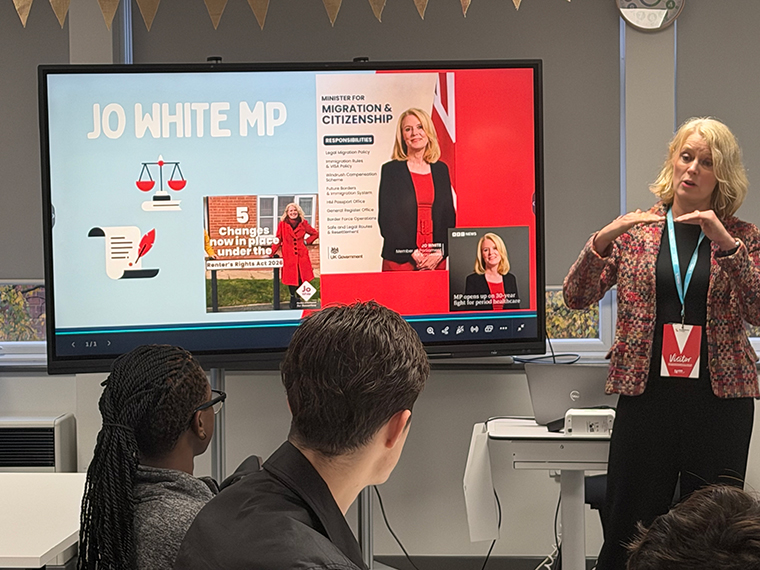
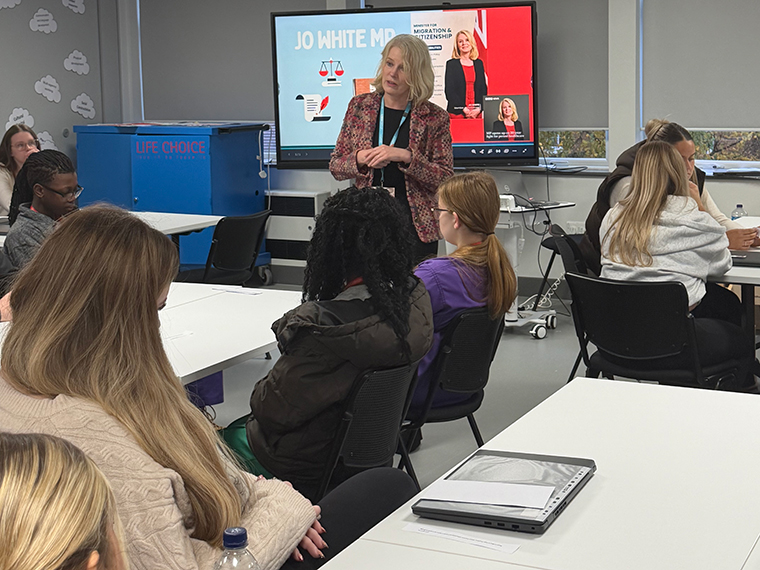
Learners at North Notts College had the opportunity to put their questions directly to local MP Jo White during a visit to the College today, as part of National Parliament Week.
The visit gave students the chance to find out more about the work of Parliament, discuss issues affecting their communities and challenge their local representative on some of the biggest issues facing the country.
Learners discuss key local and national issues with MP Jo White
A wide range of topics were raised by learners, including child poverty, education, employment, housing, healthcare, SEND provision, mental health and the future of local communities.
Child poverty and family support
One learner asked what could be done to help reduce child poverty in the area. Although targets had been met but then changed, Jo stressed that too many children were still going without the things they need. She highlighted the importance of free breakfast clubs in both primary and secondary schools, alongside wider support for families, including reviewing the support available to families with more than two children.
Healthcare and NHS workforce pressures
Healthcare and the pressures facing the NHS were also discussed. Learners asked about midwifery, social pathways and debt, raising concerns about recent shortages of midwives. Jo acknowledged the challenges and explained that training opportunities were now being put in place to help address workforce shortages.
Apprenticeships, employment and future skills
Apprenticeships and employment opportunities were a key theme throughout the session. Learners raised concerns about the lack of apprenticeship placements in construction and the difficulties young people face when trying to gain their first experience of work. Jo discussed the need for businesses to invest in younger generations, explaining that employers have a responsibility to support young people into employment rather than relying solely on experienced workers.
She also referred to the Milburn report and the challenges facing young people who are not in education, employment or training (NEET). The discussion highlighted the importance of encouraging businesses to look towards the future workforce and recognising that taking on apprentices involves an initial investment, but can bring long-term benefits. She also added that investment was a balancing act between defence, education, housing and so many demands on the public purse.
Housing and construction opportunities
Housing was another important issue. Jo spoke about the Government’s ambition to build 1.5 million homes and create employment opportunities, explaining that businesses and Government need to work together to meet housing and construction targets, while also providing apprenticeship opportunities.
Engineering skills and workforce shortages
Engineering learners raised concerns about the shortage of engineering tutors and asked what plans were in place to address this. Jo explained that engineering skills were particularly important to the defence industry and that work was needed to bring employers and education providers together to address the shortages.
The conversation also explored how to encourage more young people into engineering, particularly in the context of an ageing population. Jo highlighted the importance of improving work experience opportunities, helping young people understand the workplace and ensuring that staff feel valued and receive appropriate pay. The challenges surrounding strikes and recruitment were also discussed.
T Level industry placements
Learners studying T Levels raised concerns about finding suitable industry placements, explaining that some companies were reluctant or unable to offer opportunities. Jo acknowledged the difficulties and emphasised that employers needed to take greater responsibility for supporting placements, making them a natural part of bringing young people into the workforce.
Affordable childcare
Affordable childcare was also raised, with learners asking what could be done to help local families access childcare and support parents who need to work more hours.
Local control and infrastructure
On local issues, learners asked about the management of water and sewage systems. Jo discussed the potential for greater local control, referring to Andy Burnham’s approach to devolution and the importance of giving local communities more say over investment and decisions affecting their areas.
SEND provision and support services
SEND provision prompted a particularly important discussion. Learners raised concerns about the resources available to support children and young people with special educational needs and disabilities, highlighting the pressures facing schools, Colleges and local services.
Jo acknowledged that SEND provision was facing a real crisis, with funding pressures having built up over many years. She spoke about the need for an overhaul of investment and discussed the possibility of every school having a dedicated hub to provide support for SEND learners. She also explained that support should extend beyond the school environment, with local councils having a role in helping families access disability services and wider support. Learners were encouraged to contact their local council to find out about universal SEND provision and to raise concerns with local councillors where services were falling short.
Mental health and wellbeing
The issue of men’s mental health was also discussed, with one learner asking why helplines and support services appeared to be less available for men than women. The discussion highlighted the importance of accessible support, the role of the police where there are immediate safety concerns and the need for clear systems to help people get the support they need.
Wellbeing was another theme; Jo highlighted the importance of reducing reliance on screens and ensuring people have access to face-to-face support and opportunities to talk about their concerns.
Energy and cost of living
Questions about energy and the cost of living also featured. Learners asked about falling petrol prices and what might influence them in the future. Jo explained that prices were affected by international events, particularly developments in the Middle East. She also discussed the UK’s energy resources, including North Sea gas production and the Rosebank development, in the context of the country’s future energy needs.
Visit highlights importance of democratic engagement
The visit concluded with an invitation from Jo to the ‘People’s Palace’ as she calls it for learners and staff to see Parliament in action as well as being very impressed with the challenge our learners provided her with their well researched questions.
The session provided a valuable opportunity for learners to engage directly with their MP, ask challenging questions and explore how decisions made in Parliament can affect their everyday lives.
National Parliament Week encourages people across the country to learn more about democracy and how they can make their voices heard. The visit demonstrated the importance of giving young people the confidence and opportunity to question decision-makers, share their experiences and have a say in the issues that matter to them.